ServicesRoof Replacement
Roof Replacement in Luther, Planned From What We Find
We replace a roof only after we have walked it, checked the decking and looked in the attic. You get plain findings and photos first, then a written scope that covers underlayment, flashing, ventilation and cleanup, so you know exactly what the new roof includes.
When Replacement Is the Right Call
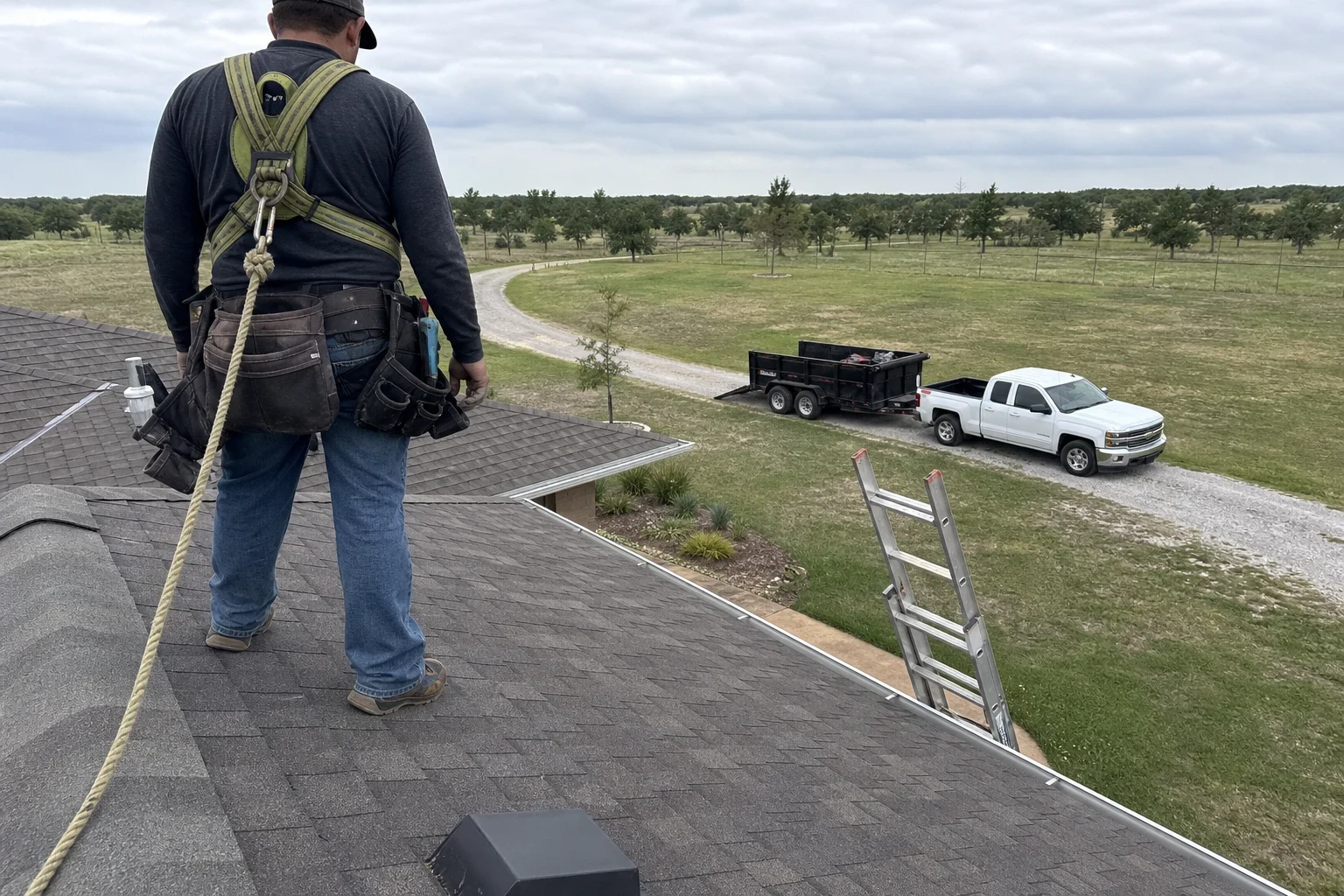
It is time for a new roof when the shingles can no longer shed water across most of the slopes, not only in one area. Granule loss down to the asphalt mat, shingles that snap when lifted, hail bruises everywhere and soft decking all mean the system is spent. One leak at a pipe boot or a few tabs lost to wind usually calls for roof repair instead.
Roofs in Oklahoma face spring hail, straight-line wind, summer heat and winter ice. That mix wears shingles unevenly, so we look at each slope before we give you an answer. When a repair will get you several more good years, we say so and tell you why.
What a Replacement Includes
- 01
Tear-off down to the sheathing
We remove every shingle, nail and sheet of felt until bare sheathing is all that's left. A new layer over an old one hides weak wood and adds load to the framing, so a full strip shows us exactly what the new nails will hold.
- 02
Deck inspection and new sheathing
With the deck exposed, we walk it and mark plywood or OSB that is rotted, spongy or coming apart. Those pieces are cut out and replaced so the new nails bite into solid wood.
- 03
Underlayment and ice barrier
Synthetic underlayment covers the whole deck, and an ice and water barrier goes in the valleys and around penetrations, where ice dams and wind-driven rain push water sideways.
- 04
Fresh flashing and drip edge
We put in new step flashing, pipe boots, chimney flashing and drip edge instead of reusing the old pieces. Worn flashing often causes leaks on new roofs, and replacing it is cheap while the roof is open.
- 05
Balanced attic ventilation
We pair soffit intake with exhaust at the ridge or roof vents. Summer heat that can't get out bakes the shingle mat from below and wears the roof out years early.
- 06
Covered landscaping and nail sweep
Shrubs and beds get tarped before tear-off begins. Debris is hauled away at the end of every day, and we roll a magnet across the lawn, beds and driveway to pick up stray nails.
Questions about Roof Replacement?
Call(405) 407-1742Signs Your Roof May Need Replacing
Bald patches and grit in the gutters
Granules shield asphalt from UV. When they pile up in gutters and downspouts and dark bare spots show on the shingles, the shingles are drying out and their seal is failing.
Shingles that curl, cup or crack
Raised edges or sunken centers show a shingle has gone stiff. Wind slips underneath easily, and the shingle breaks instead of flexing back flat.
Hail bruises on many slopes
Soft dents that crush the mat weaken a shingle even if it looks fine from the yard. When that damage covers many slopes, a repair usually won't last.
A sagging roofline or spongy deck
A roof plane that dips between rafters, or sheathing that gives when we step on it, means water has likely been getting to the wood for a long while. The trouble is in the structure under the shingles, so new shingles by themselves won't fix it.
Leaks that keep moving
A single leak calls for a repair. Fresh stains in different rooms, year after year, point to a roof system that is giving out.
How a Replacement Runs
- 1
Inspection and findings
We walk the roof, check flashing and vents, and look at the attic for daylight, staining and ventilation. You get photos and a plain explanation of what we found before any recommendation.
- 2
Written scope and materials
If replacement makes sense, we write out every line: tear-off, decking allowance, underlayment, flashing, ventilation, shingle line and color. We pull the permit where your jurisdiction requires one.
- 3
Tear-off and dry-in
On work day we protect the yard, strip the roof and repair the deck, then get underlayment down the same day so your home is not left open to weather.
- 4
Shingles, flashing and vents
Shingles go on to the manufacturer's nailing pattern, with new flashing at every wall, valley and penetration. Ridge vent or caps go on last.
- 5
Final walk and cleanup
We check the finished roof with you, sweep for nails and clear the debris. You keep the photos of the deck and finished work.
What Moves the Price of a New Roof
We build your price from measurements we take ourselves and the condition we find up top, so you will not hear a number before we have been on the roof. Each line of the written scope ties back to a specific part of the job. The factors below shift the total the most.
- Size and pitch
- Total squares of roofing set the material count. Steeper pitches need extra safety setup and slow the crew down, which adds labor.
- Layers and decking condition
- Two layers of old shingles take longer to remove and dispose of. Any decking that has to be replaced is added by the sheet, and we show you the photos.
- Material choice
- Standard architectural shingles, impact-rated shingles and metal each carry different material and labor costs. We compare them for your home so you can weigh price against how long they last.
- Complexity and penetrations
- Valleys, dormers, chimneys, skylights and multiple roof planes all need more flashing and cutting than a simple gable.
- Ventilation and permits
- Adding ridge vent or soffit intake to fix an undervented attic adds to the scope, as do permit fees where they apply.
Roof Replacement Questions
Can the new shingles go right over the old ones?
We strip the old roof instead. Layering over it hides soft or rotten decking, traps heat under the new shingles and adds weight to the framing. Getting down to bare wood also lets us put in new flashing and underlayment correctly, and that is where a lot of leaks begin.
How long will the replacement take?
Most single-family roofs go from tear-off to finished in one to two days. Bigger, steeper or more complicated roofs take more time, and rain or strong wind can shift the schedule. We dry in the deck before we leave each day.
Does insurance pay for hail or wind damage?
That comes down to your policy and what the adjuster finds. We can photograph the damage and explain it so your claim rests on clear evidence. If the damage came from a recent storm, our storm damage repair page covers that process more fully.
Do I need to be home during the job?
No. We'd like a few minutes with you before tear-off and again at the final walk, and you're free to leave in between. Indoors there will be constant hammering and some vibration, so take down pictures and mirrors on upstairs walls before the work day.
Should the gutters be replaced too?
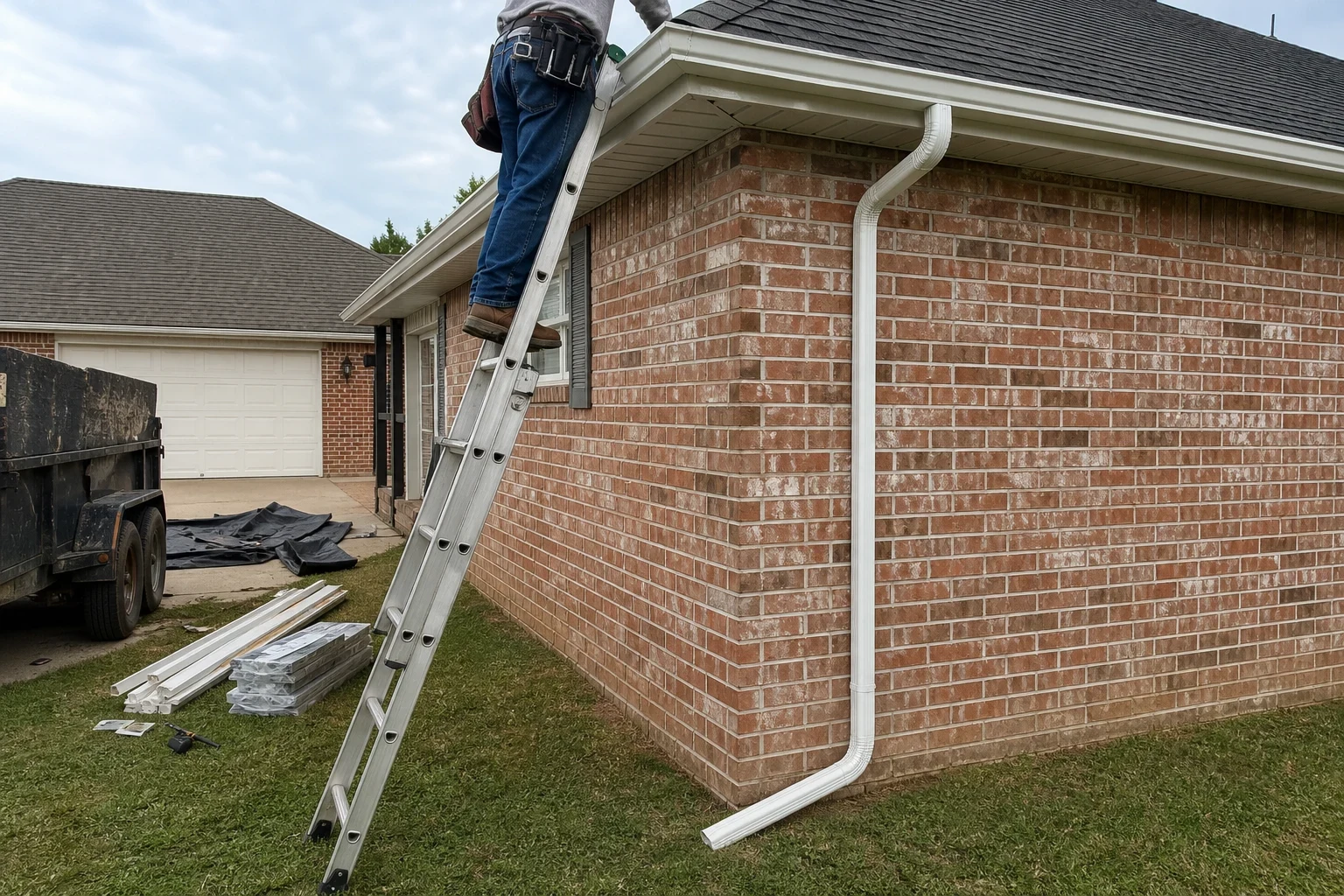
Only when they need it. Drip edge gets replaced with the roof, and sometimes the gutters must come down to do that properly. If yours sag or are too small, including gutters in the same project avoids setting up twice.
Find Out Whether Your Roof Needs Replacing
We start with an inspection and photos, then tell you plainly whether repair or replacement makes sense. We work in Luther and nearby towns including Jones, Harrah and Choctaw.