ServicesRoof Inspections
Roof Inspections in Luther, OK
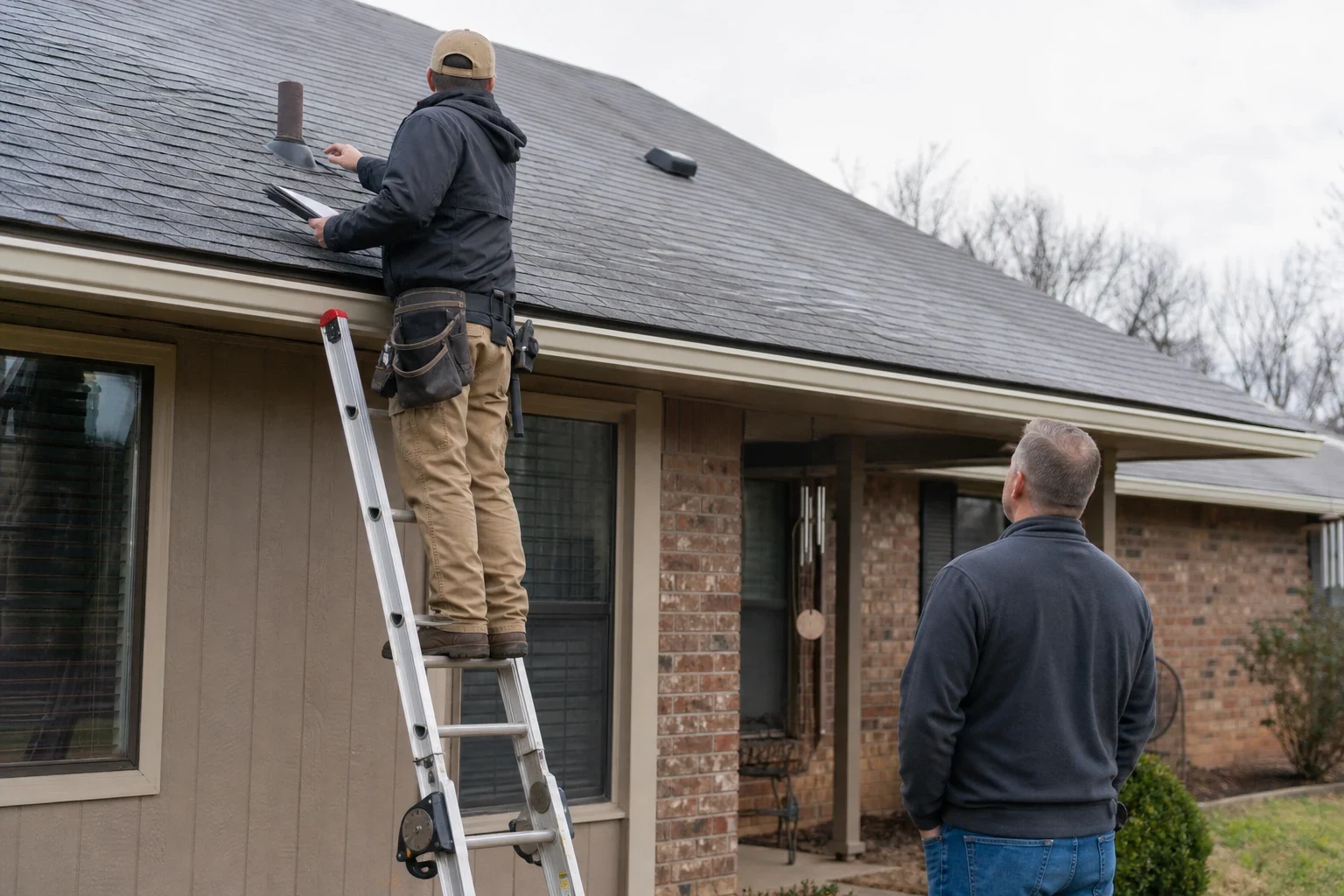
A careful roof check tells you what shape your roof is in and why, before anyone talks about repair or replacement. We walk the roof, check the flashing and vents, look in the attic, then show you photos of each finding with a plain explanation.
What a Roof Check Is For
Most roof problems start small and out of sight: a lifted shingle tab, a split pipe boot, a nail backing out under the course above it. A careful look finds those early and sorts them into what matters now and what can wait. We put the findings first and the recommendation second, so you can see the reason behind anything we suggest.
Roofs around central Oklahoma take hail, straight-line wind and hard freeze-thaw swings, sometimes in the same year. That is why we look past the surface. Granule loss, bruised shingle mats and broken sealant strips rarely show from the ground, but they shorten a roof's life and change how it handles the next storm.
It makes sense to have the roof looked at ahead of a home purchase or sale, after hail or high wind, once the shingles pass roughly 15 years, or when a ceiling stain shows up and you want its cause found before anyone prices a fix.
What We Check on Your Roof
Shingle field and granules
We look for granule loss, cracking, curling, blistering and hail bruises, which feel soft under a fingertip where the fiberglass mat has fractured. We also check whether the sealant strips are still bonding each tab to the one below.
Flashing and penetrations
Step flashing at sidewalls, chimney counterflashing, pipe boots and box vents are where most leaks begin. Rubber pipe boots dry out and split in the sun, and exposed nail heads rust and let water follow the shank into the deck.
Valleys, edges and ridge
Valleys carry the most water on the roof, so we check for worn or poorly cut shingles there. At the eaves and rakes we look at drip edge and starter course, and at the top we check ridge caps and ridge vent.
Decking from below
Up in the attic, we check the underside of the plywood or OSB for pinpoints of daylight around nails, dark water staining, damp insulation and rusted nail tips. On the roof surface, a spongy feel underfoot tells us where the deck may have weakened.
Attic airflow
Air should come in low through the soffit vents and leave high through a ridge vent or box vents, and we check that both ends of that path are open and reasonably balanced. When insulation blocks the soffits or exhaust outweighs intake, the attic overheats in summer and traps moisture in winter, cooking shingles from underneath and inviting deck rot.
Gutters and drainage
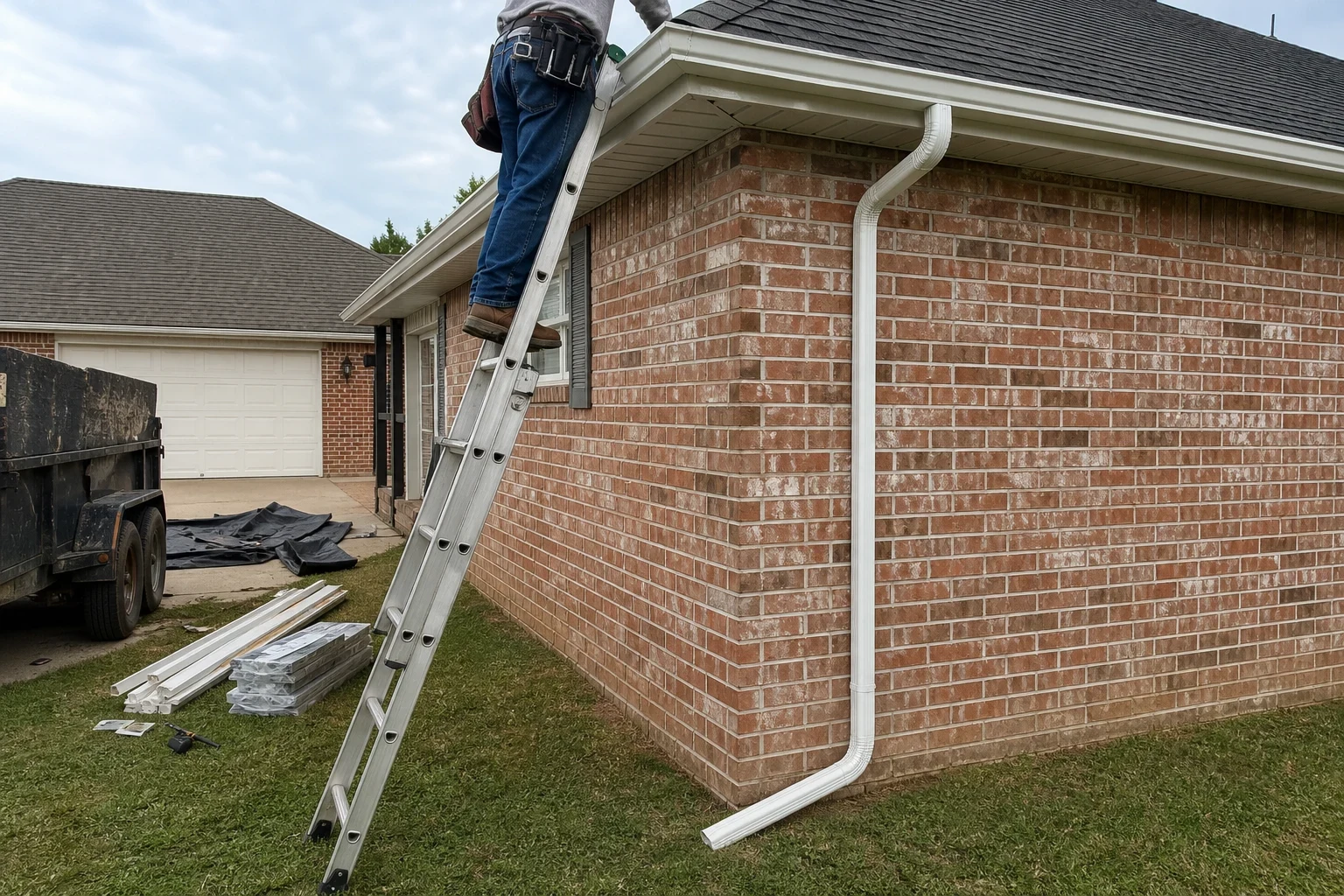
Clogged or sagging gutters back water up under the drip edge and into the fascia. We note what we see so it can be handled through our gutters service if it needs attention.
Signs Your Roof Is Due for a Close Look
- A recent hail or windstorm
- From the yard, hail damage is easy to overlook. Dents in gutters or downspouts, or fresh spatter marks on a fence or AC unit, suggest the roof was struck as well.
- Grit collecting at the downspouts
- New shingles drop a few loose granules early on. When an older roof keeps leaving dark grit in the gutters and at the downspout outlets, the asphalt is losing its sun protection and aging quicker.
- Stained ceilings or a damp-smelling attic
- Brown rings in the drywall or a musty smell upstairs mean water is slipping past the shingles. It often travels along a rafter or under the deck before dripping, so the stain may be far from the opening. We trace that route back to the true entry point.
- Shingles lifted or gone
- Hard gusts can break a tab's seal without ripping it off. After that, the loose tab flaps in each wind until it creases or tears away.
- An aging roof or a home sale
- When a roof nears 20 years, or a home is being bought or sold, a documented roof check shows how much life remains before any money changes hands.
How the Visit Goes
- 1
A quick phone conversation
On the call, we ask how old the roof is, whether it leaks, when recent storms hit and why you're calling now. That shows us where to look most closely when we arrive.
- 2
From the ground up to the roof
We begin on the ground with the gutters, downspouts, fascia and siding under the eaves. Then, if the pitch and weather make it safe, we climb up and work through the roof one section at a time, photographing each problem with an object in the shot for scale.
- 3
Up in the attic
With your permission, we look at the underside of the deck, the state of the insulation and whether the vents are moving air. Slow leaks tend to show up here well before a ceiling stains.
- 4
What we found, in plain words
We go through the photos with you one by one: what each item is, what caused it and how soon it needs attention. Only after that do we say whether it calls for roof repair, storm damage repair, roof replacement or just watching it.
What Affects the Cost of a Roof Check
The price depends mostly on how much roof there is and how long it takes to cover it safely and thoroughly. We go over what affects your price when you call, before anything is scheduled.
- Roof size and layout
- A simple gable roof goes quicker than one with several hips, valleys, dormers and roof-to-wall joints, each of which needs close attention.
- Pitch and height
- Steep or two-story roofs can call for harness anchors and extra ladder setup, which adds time.
- Attic access
- An open, walkable attic is quick to check. A tight crawlspace or a small hatch in a closet takes longer to work through.
- What the report is for
- A look after a storm is different from a detailed report for a home sale or an insurance claim, which carries more photos and fuller written notes.
Roof Inspection Questions
- How long will you be at my house?
- Usually one to two hours, attic included. Big or steep roofs, or ones covered in old patches, can take more time. We go over what we found with you before we leave.
- Do I need to be home for the visit?
- We'd prefer it, mainly so we can reach the attic and review the photos together. If that won't work, we can check the outside and go through the findings with you by phone afterward.
- Is this just a pitch for a new roof?
- No. The visit is about how your roof is doing, not about selling you something. If repairs will give you more good years, you'll hear that. If the roof is close to worn out, we show you the evidence and explain it.
- Will a roof check help my insurance claim?
- It can. Dated photos and notes on hail strikes, wind-lifted shingles and dented soft metal give you a clear record for your insurer. We explain what we saw, and the adjuster decides what the policy covers.
- How often does a roof need checking?
- For most roofs, once every year or two makes sense, plus after any serious hail or wind. Early spring, ahead of the stormier months, and fall, ahead of ice and hard freezes, both work well.
- Do you check roofs beyond Luther?
- We do. We also inspect roofs in Jones, Edmond, Choctaw, Harrah, Midwest City and Spencer.
Find Out What Your Roof Actually Needs
You get the facts about your roof first and a recommendation second. Tell us what you've noticed and we'll set a time to come take a close look.